Theoretical metal weight vs measured weight
Theoretical weight is calculated from geometry and an assumed density. Measured weight comes from a weighing instrument. Agree which basis the supplier will use for invoicing, and what is included, before comparing kilogram prices.
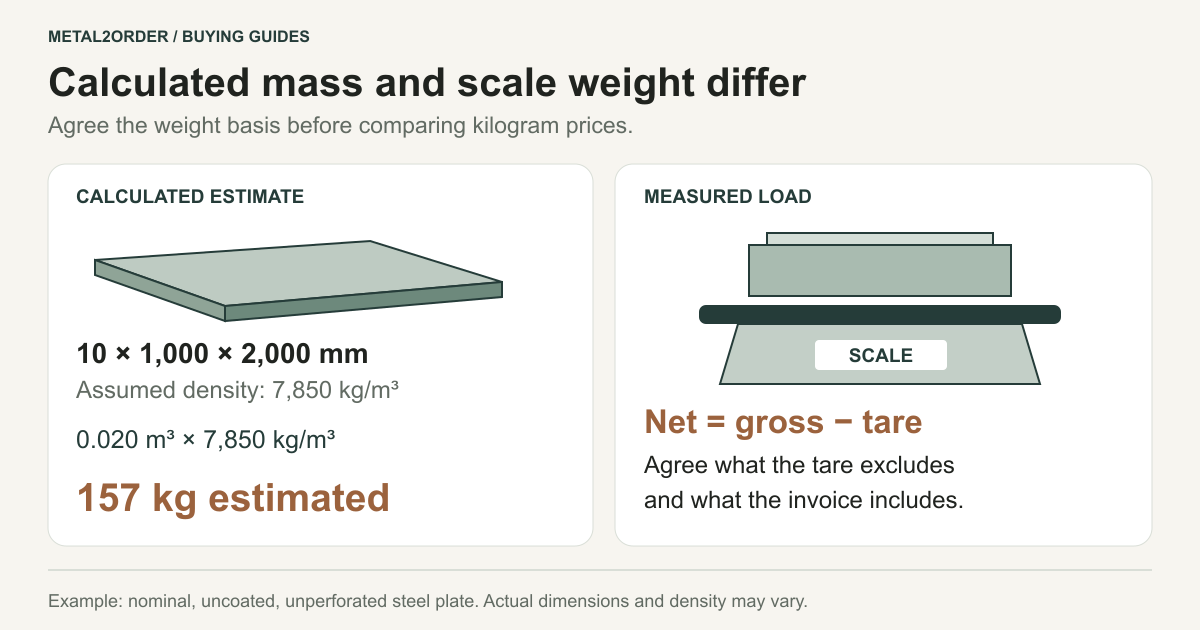
Calculate with one consistent set of units
For a simple solid, mass = volume × density. With dimensions in metres and density in kg/m³, the result is kilograms. “Weight” is the usual trading term here; the calculation returns mass.
For a plate measured entirely in millimetres: mass (kg) = thickness × width × length × density (kg/m³) ÷ 1,000,000,000. For a solid round bar: volume = π × diameter² ÷ 4 × length. For a round hollow section: volume = π × (OD² − ID²) ÷ 4 × length. Use metres in the last two expressions before multiplying by density.
Why the delivered weight may differ
Actual thickness, width and length vary within the agreed tolerances. Alloy density, coatings, holes, bevels, cut-outs and rounded corners can also change mass. Use the appropriate grade density rather than applying one steel factor to aluminium, copper or every stainless grade.
A simple hollow-rectangle formula treats corners as square. It does not reproduce a real tube’s radiused corners exactly. For rolled beams and other complex sections, use the applicable section table and state whether its mass per metre is nominal. For cut parts, use the actual geometry or label the rectangular blank estimate clearly.
References: British Stainless Steel Association — physical properties at ambient temperature.
Read gross, tare and net separately
Gross is the combined measured load. Tare is the excluded load, such as a vehicle, pallet or packaging. Net is gross minus tare. A weighbridge’s difference between loaded and empty vehicle readings can still include packaging unless that is separately accounted for.
Request the weighing record and agree what the net figure includes. Check that the ticket corresponds to the shipment, with the vehicle or load identification and weighing times. The scale’s resolution and weighing conditions affect a measurement; a calculated figure with many decimal places does not make it a measured quantity.
References: NIST — weighing and scales FAQs.
Put the billing rule in the quotation
- State theoretical weight, measured net weight, per-piece or per-length billing explicitly.
- For theoretical billing, agree the dimensions, section table, density and rounding method.
- For measured billing, agree whether packing, coatings and other included items are part of the billed weight, and which weighing record governs.
- Confirm how cut loss, offcuts, minimum billable quantities and any weight discrepancy will be handled.
- Keep material price, cutting, packing, freight and taxes itemized so quotations remain comparable.
References and scope
Sources checked for this guide on 28 September 2026. Standards pages and technical summaries provide context; use the agreed standard edition and purchase specification for the order. Examples are illustrative and do not confirm product availability.
- British Stainless Steel Association — physical properties at ambient temperature
Grade-dependent physical properties. The 7,850 kg/m³ worked example above is an explicitly chosen estimate, not a value for every alloy.
- NIST — weighing and scales FAQs
Technical explanation of gross, tare, net and rounding; not a statement of Indian legal requirements.